
A Mexican History Lesson
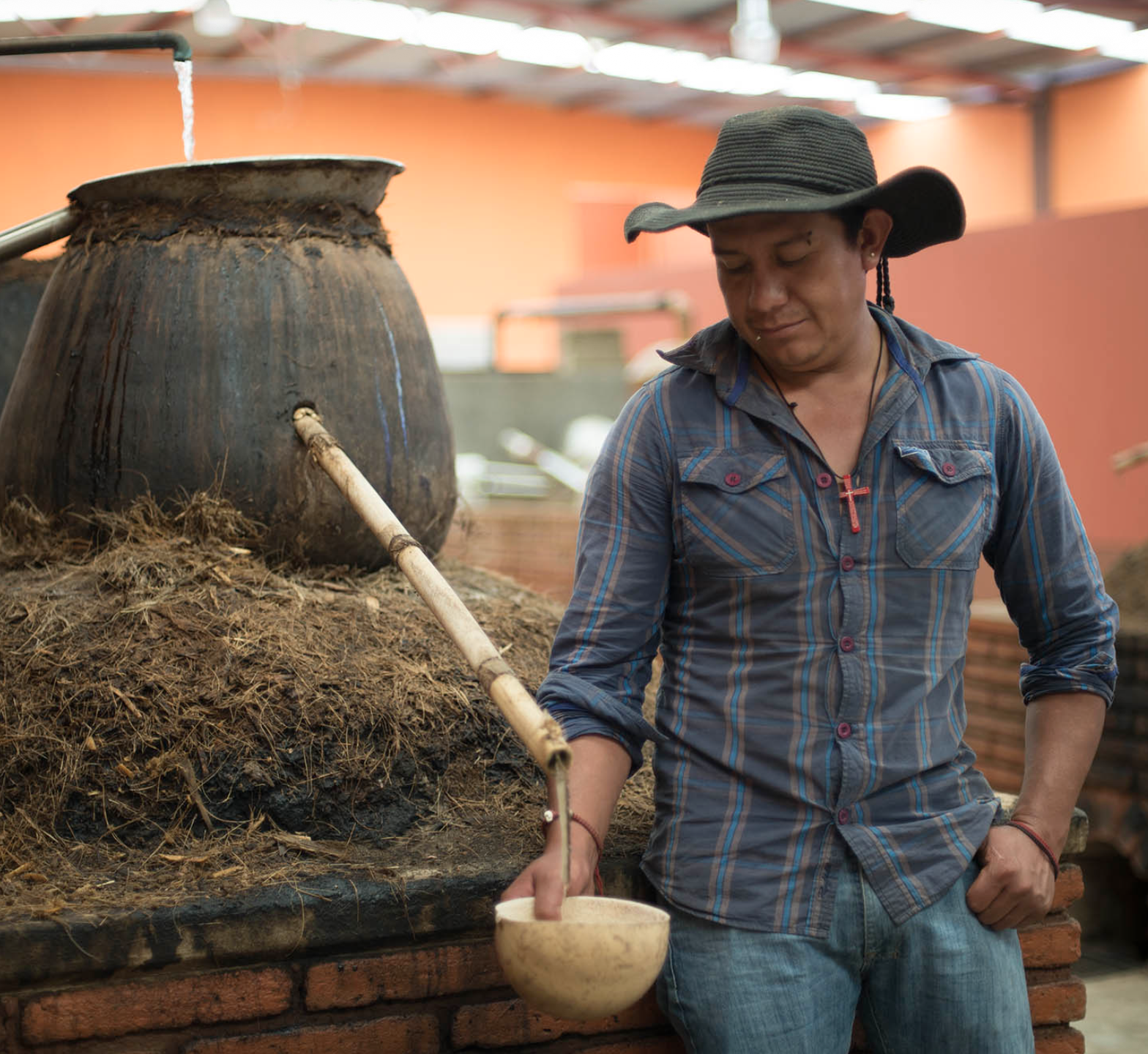
Armando Arellanes with his clay pot stills in Santa Catarina Minas, Oaxaca
I was doing some marketing work around this week’s Vinepair article naming Los Perdidos as one of the best mezcal selections of 2026, when I found myself in need of clarification. I’ve been working with Jake Lustig and Terranova Spirits for almost a year now, but I wasn’t familiar with the Los Perdidos brand specifically as it’s relatively new to the portfolio, and I had a few questions.
To be clear, Los Perdidos is distilled in Santa Catarina Minas at the home of Don Amado and Mina Real, two longtime stalwarts of the Terranova book (and a distillery I visited in person almost fifteen years ago), but there’s one big difference between those two brands and the very limited Los Perdidos expressions: the inclusion of used French oak barrels.
Personally, I tend to shy away from wild agave distillates aged in oak because it defeats the purpose for me. If I’m drinking an expensive Arroqueño mezcal, I want to taste the agave not the oak. Plus, as I told Jake when I called to confirm details about the brand, I don’t see what used Armagnac or Cognac barrels have to do with Oaxacan mezcal.
That’s where Jake set me straight and reminded me to brush up on Mexican history!
“You know why you see green eyes in Oaxaca sometimes, David?” Jake asked me rhetorically; “Because there’s a long history of French influence in Mexico, especially around Oaxaca, and especially around food and alcohol.”
Indeed, I had not considered the brief, but nevertheless important three years of the 19th century (1864-67), when Napoleon III aligned with conservative officials to create the Second Mexican Empire, and installed Maximillian as its ruler. Not everyone remembers why we actually celebrate Cinco de Mayo, myself included (you should look that one up).
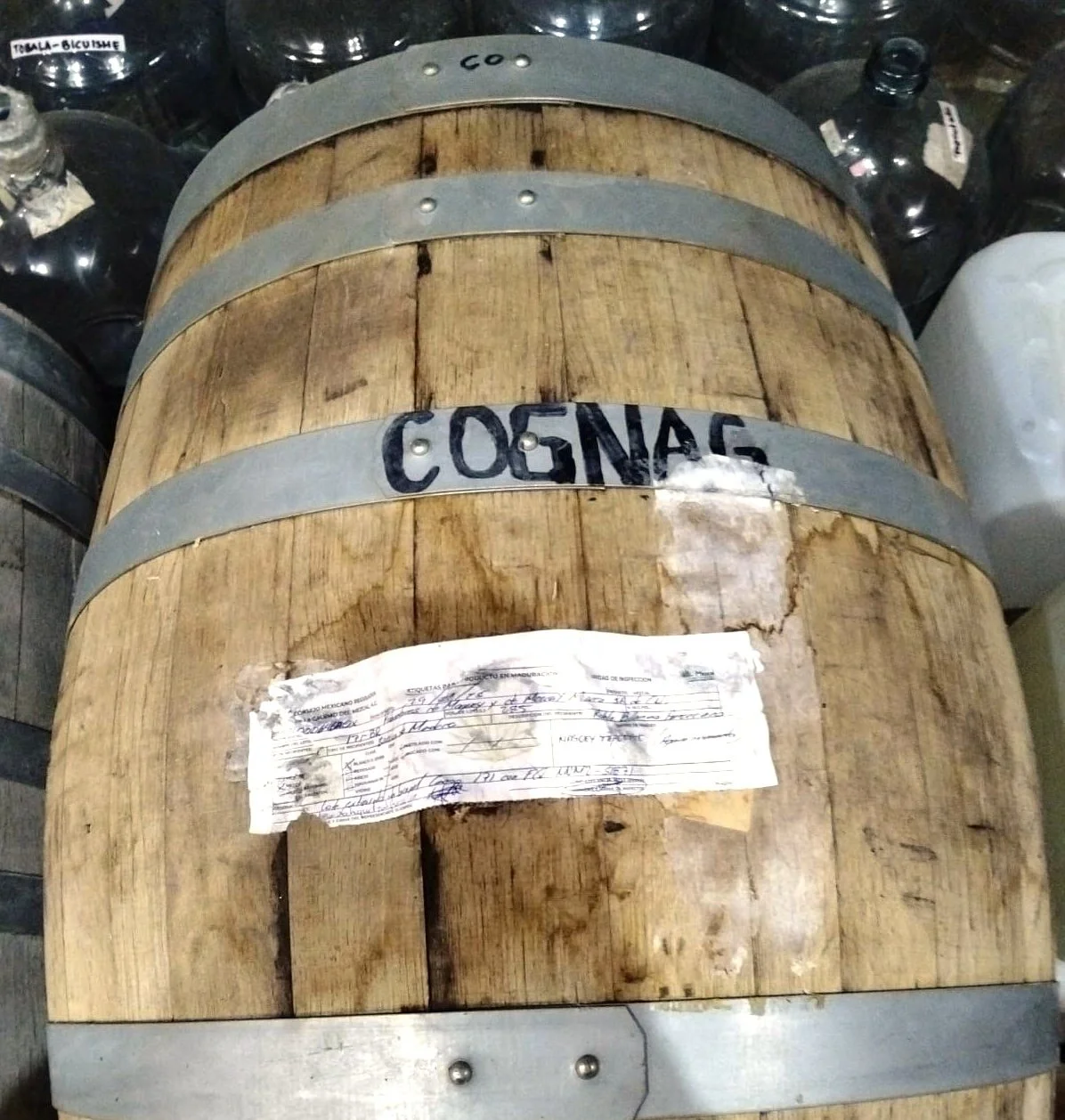
A used Cognac barrel resting at the Los Perdidos warehouse in Oaxaca
While the Monroe Doctrine (and other events) eventually forced the French out of Mexico, and Maximillian was ultimately captured, court-martialed, and executed in 1867, the influence of French culture didn’t die with the empire. Porfirio Díaz, the infamous general and dictator of Mexico from 1876 until his defeat in the revolution of 1911, was a huge admirer of France and strived to follow its lead in both the arts and cuisine.
As The Eye Mexico wrote in an article about Oaxacan cuisine last year, “French influence in the kitchen is no accident. Díaz himself was famously Francophile, and under his rule, Parisian aesthetics permeated architecture, fashion, and especially cuisine. French chefs were invited to Mexico to cook for the elite, and French cooking techniques became the standard in upper-class kitchens and newly formed culinary academies.”
And do you know where Porfirio Díaz was born and raised? You guessed it: Oaxaca.
Díaz’s obsession with French culture became known during that time in Mexico as “afrancesamiento” (Frenchification) and that included the world of distilled spirits and cocktails. Entire cocktail books were written under Diaz’s reign (which you can read online here) bringing the world of French aperitifs and libations into Mexico’s bars and restaurants.
When you think about the long-standing influence of French culture upon Mexico’s history, the French oak-finished mezcals—rested in ex-Cognac, Armagnac, and Calvados barrels—from Los Perdidos are like an homage to that heritage. That’s pretty damn cool, if you ask me. Plus, they’re absolutely delicious, as I discovered this morning when my samples were delivered. As Vinepair states in the aforementioned article, these are definitely “worth the splurge.”
-David Driscoll