
The Future of Tequila is Regenerative Farming
We were driving east on MX-90, just outside of San Antonio de Fernandez, when I noticed a striking similarity between the agave orchards of Los Altos and the grand cru vineyards of Burgundy. It was as if we were driving north on D974, the crest of the Cote d’Or on our left, planted with vines along each slope that flow down gently to the flatlands, but in this case it was nothing but blue agave. It continued for miles until we reached Atotonilco, where we made a right turn and entered the driveway up to Enrique Fonseca’s warehousing complex in the mountains across the way. I got out of the car, stretched my legs, and marveled at how high the rows of agave reached towards the the top of each peak.
If there were such a thing as grand cru agave orchards in Jalisco, we had to be staring at them.
I was in Jalisco because three months ago I told my client Enrique Fonseca—one of the largest landowners of agave in the region as well as one of its most heralded distillers—that he needed to think of his tequilas like Burgundian wines. The best wines in Burgundy come from the best vineyard sites—those with particular soils, direct sun exposure, and great drainage. The same was true with his tequilas. Farmed organically, regeneratively, and distilled on a site-by-site basis, Enrique’s spirits are closer to low-intervention Burgundy in terms of production than any other distiller in the world. We just needed to close the loop for educational purposes, so he invited me out to help create some media.
For as long as I’ve been in the industry, professionals and amateurs alike have stressed the importance of additive-free tequila, without the use of diffusers, made simply and purely with healthy, ripe agave and distilled cleanly with minimal use of oak (if any). However, it wasn’t until Enrique Fonseca released his first Cosecha Single Huerta Blanco—the 2013 “El Maguey”—that the subject of a single site tequila truly entered the general conversation, let alone the idea of a grand cru tequila.
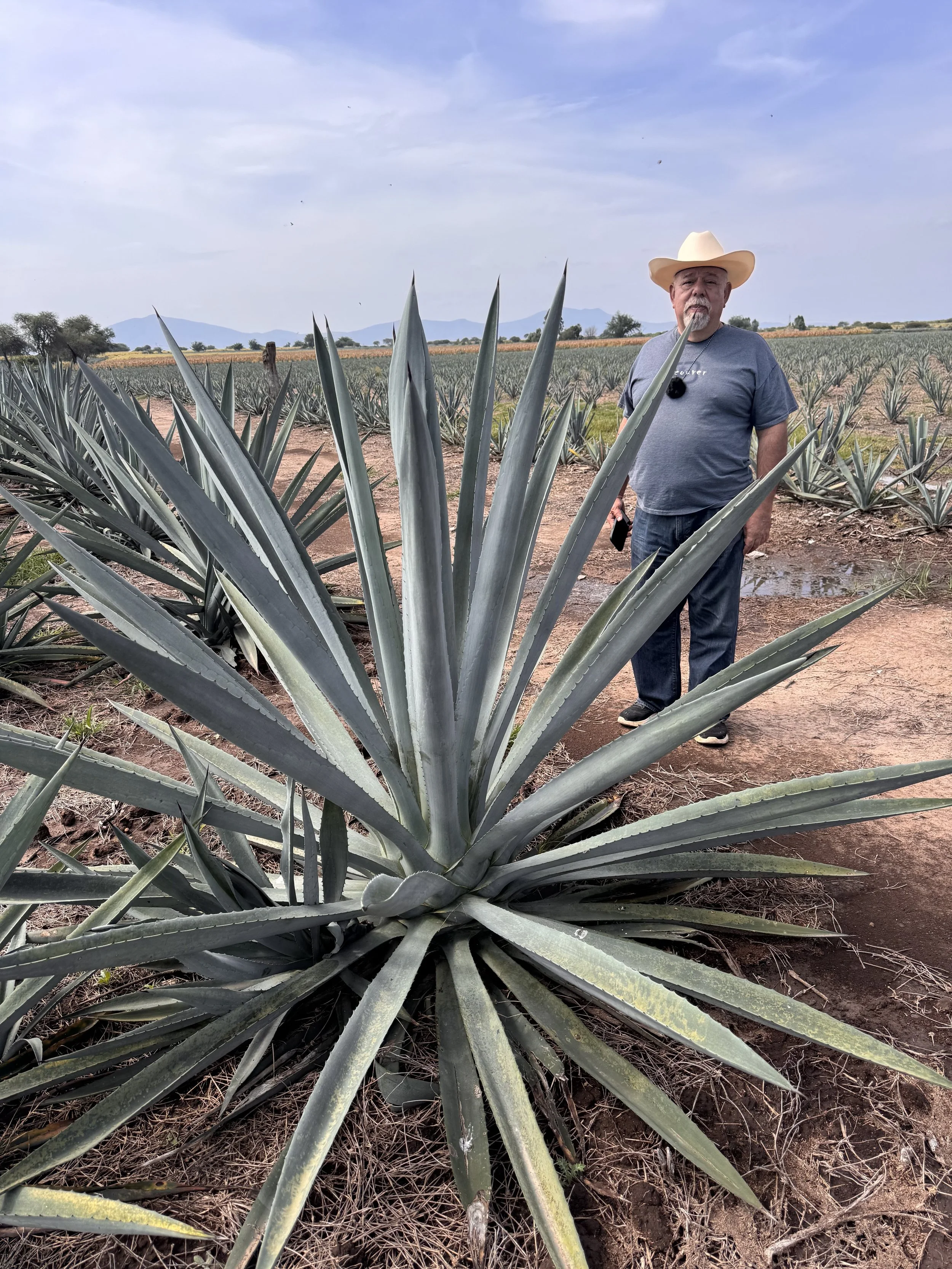
Enrique Fonseca next to an incredibly healthy Espadín at one of his orchards in Michoacán
Years later, Enrique released a second edition of Fuenteseca Cosecha, a 2018 vintage sourced from a white, calcium-rich orchard in Michoacán called “Las Antennas,” named after the radio towers along side it. Earlier this year, a third Cosecha was released: the utterly divine 2020 vintage from “La Tuna de Arriba” that made my head explode.
Three different expressions made with agave piñas from three different locations, each farmed sustainably and regeneratively, resulting in three absolutely unique, yet all-together ethereal tequilas.
For the last five years, plenty of tequila enthusiasts have geeked out about the Fuenteseca Cosecha’s single origin distillates. However, we’ve yet to really learn specifically why these sites produce some of the best agave piñas in the region, as well as what makes each site so unique. In Burgundy, we have over a thousand years of documentation, including detailed notes from Benedictine monks to famous world leaders, validating and heralding certain wines from specific plots of earth. At this point, we know mostly from a shared experience. Could we eventually create a similar bank of experience concerning blue agave in Jalisco?
Just like with Burgundy, it’s complicated.
In the last issue of B.Y.O.B. magazine, Paul Knittel wrote a very timely article, asking whether farming itself is beginning to challenge our understanding of terroir in Burgundy. More over, could we truly experience a grand cru site if it wasn’t farmed properly? Answering for him and his colleagues in the industry, he made it clear that organic farming and low-intervention winemaking took priority over classification status. Today, the inherent greatness of a particular site is realized “perhaps thanks to great farming, or perhaps in spite of it,” and that not enough of Burgundy’s great vineyards have “been farmed in a way that truly explores their potential.”
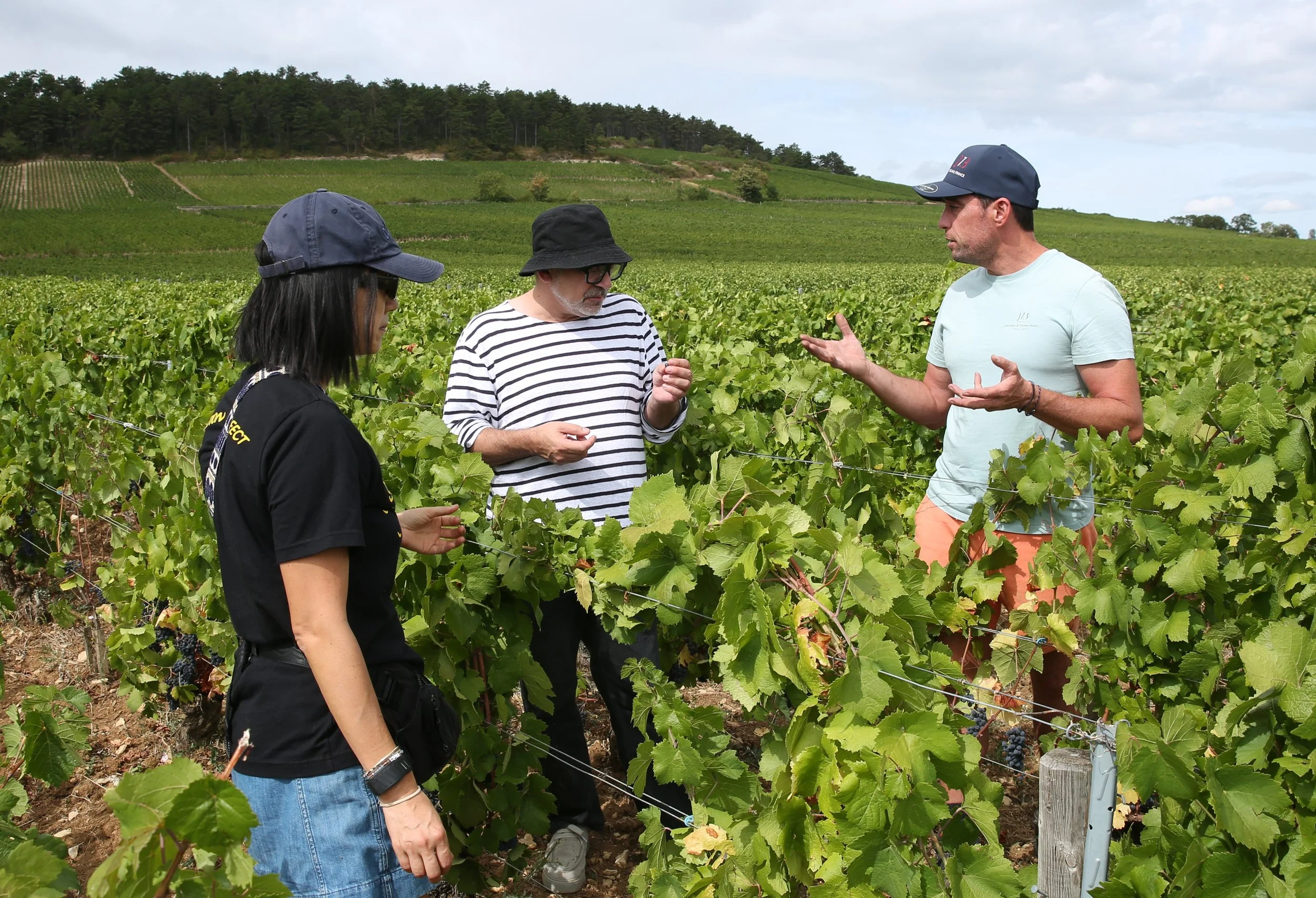
Standing with Icy Liu and Paul Wasserman in the vineyards with Thomas Bouley
Having spent nine days in Burgundy this past August, documenting the harvest with various producers across the region, I can tell you from personal experience that the difference between vineyards that are farmed regeneratively and those that are not is extraordinary; especially with the intense heat of the 2026 vintage as a gauge. I’ll give you two clear examples. While spending the afternoon with Thomas Bouley, the new recipient of Michelin’s highest 3 star (grape) ranking, I hopped in his truck along with his dog Balto and headed down from his winery in Volnay to look at one of his aligoté vineyards. Upon examination, his grapes were healthy and vibrant. Thomas was in no hurry to harvest even with the temperatures pushing 90 degrees. Next to him, in the adjacent vineyard, the grapes from his neighbor’s parcel were shriveled and beginning to raisin. For some reason, these vines weren’t capable of the same endurance. When I asked Thomas if the key difference was the way he farmed, he looked at me with chagrin and said: “Bien sûr!”
The second experience happened two days later, when Paul Wasserman and I drove up to one of Chanterêves vineyards in Savigny-Les-Beaune before dinner at Le Soleil. Whereas just about every producer in the region had harvested earlier in the week due to the heat, the pinot noir grapes farmed by Chanterêve were still hanging on the vines, juicy and ripe, but with plenty of acidity. I looked at Paul and said: “It’s the farming, right?” He smiled and nodded. We were walking amongst one of the healthiest vineyards in all of Burgundy and the durability and vigor of these vines was instantly apparent with every bunch we sampled. Other pinot noir vineyards I had visited earlier that morning had been scorched, yet this site also utilized carefully-trained leaf canopies to help shield the grapes from the sun.
While walking through one of Enrique’s blue agave vineyards in Michoacán this past week, he pulled me aside to look at one particular row of plants that was absolutely massive. “Look at these hijuelos,” he said; “They’re as big as the adult agaves in the row next to them.” In order to reproduce, each agave plant will eventually sprout a group of smaller agave shoots around it, which are called hijuelos. Once they reach a certain size, they’ll be harvested and replanted into other parts of the orchard until they eventually sprout their own hijuelos and become mature adults. In the case of these particular hijuelos, they were huge.
“It’s a sign of the soil,” Enrique added: “We spent years adding organics and manure into this site and that work is finally showing. Only the healthiest soils can grow hijuelos like this.” I walked over to an adjacent orchard owned by a different farmer as a comparison. It reminded me a bit of my vegetable garden back home in Burbank: clearly an effort was made, but that’s about it.
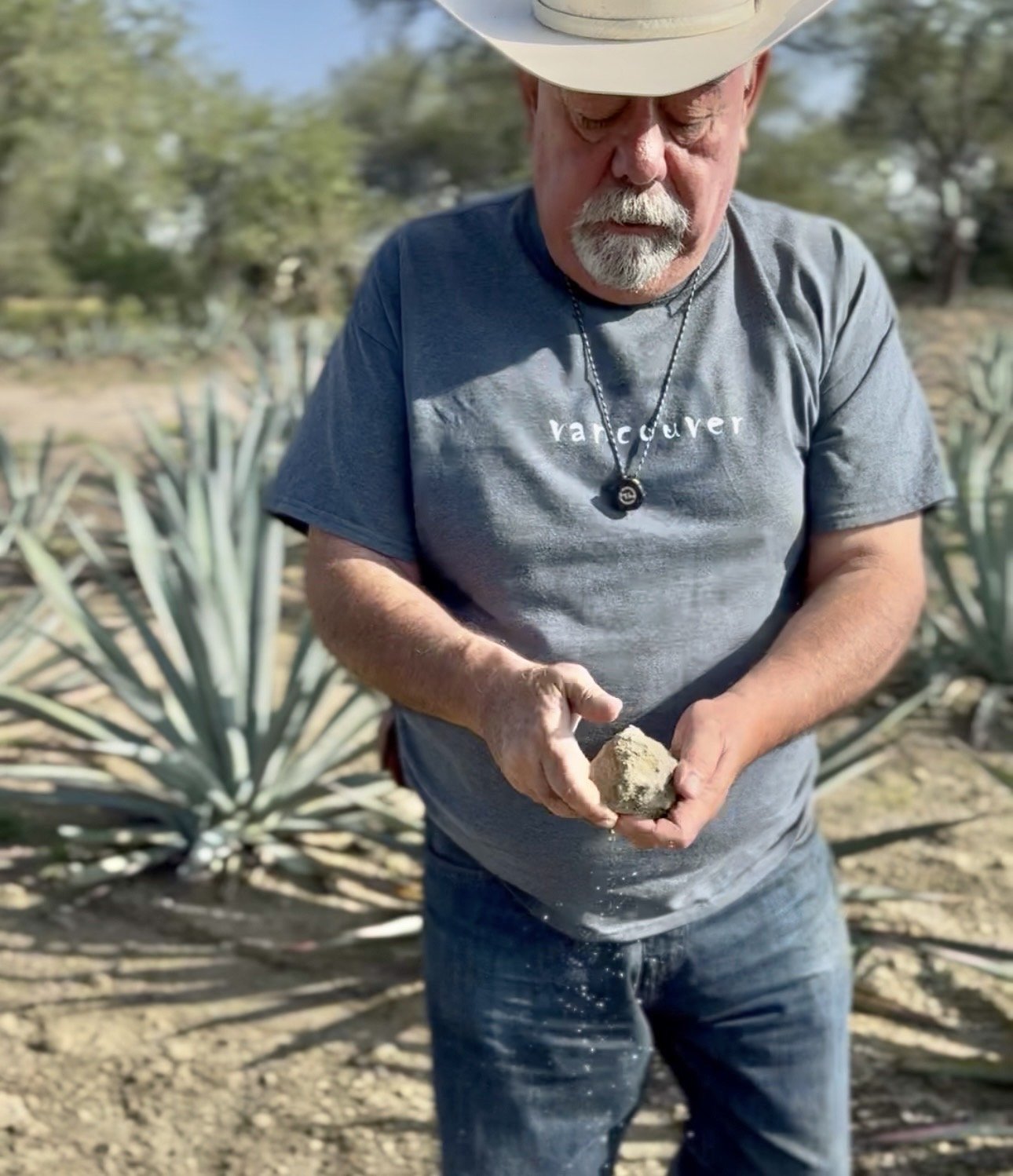
Enrique picking up a large calcium-coated rock in his white soil agave orchard
We spent the entire afternoon driving to different sites between Michoacán and Los Altos, examining red clay soils, calcium-rich white soils, and black soils called ciénega that once sat beneath a great lake once connected to the nearby Lago de Chapala. “Each of these terroirs creates different flavors in the agave,” Enrique explained to me; “However, if you don’t farm correctly, then distill each location separately, those flavors are ultimately lost in the tequila.”
Which brings us back to the “complicated” part.
How many Tequila producers are 1) farming organically, 2) using regenerative practices in the field (Enrique uses sheep in many of his sites to help manage the grass between agave plants), and 3) harvesting, cooking, milling, fermenting, and distilling these lots individually, without the use of additives or chemicals in the process, and bottling without oak maturation so that the clear and precise flavors of each tequila can be compared, contrasted, and ultimately understood? I can show you the answer with one hand and I don’t need many of my fingers to do it. Like Paul Knittel’s observation about Burgundy, few agave orchards have been farmed in a way that explores their true potential, let alone distilled.
That being said, my initial question coming into this trip was less rhetorical. I simply wanted to know how Enrique determined which of his sites would produce the most ethereal and complex Tequilas. They all seemed pretty healthy to me! Could you tell simply from the soils?
“We don’t know until we distill them,” he answered; “After we taste them, that’s when we decide. We know great Tequila begins in the earth, but we’re still learning about the potential of each site.”
-David Driscoll