
The Wine Archetype for Modern Storytelling
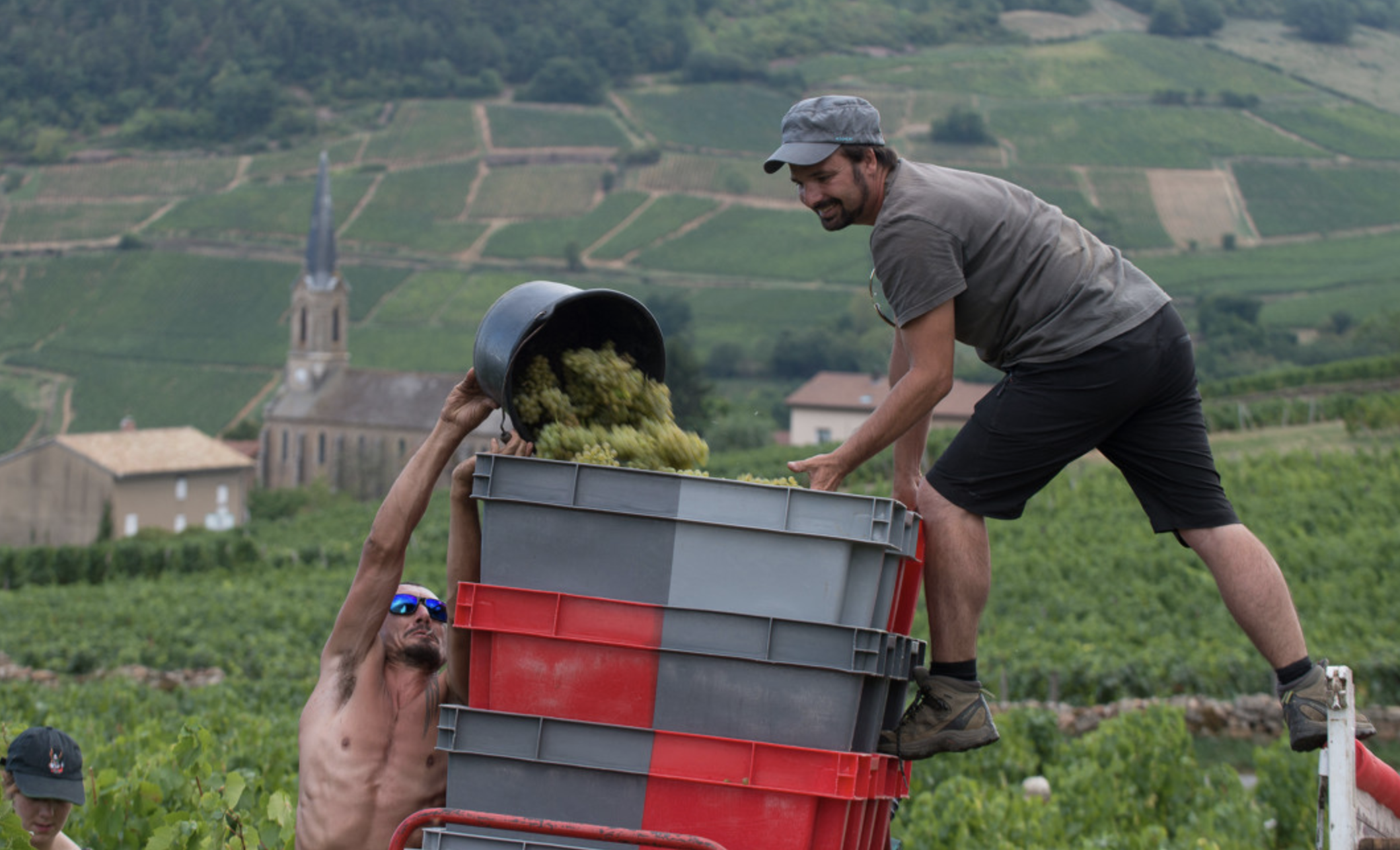
The harvest at La Soufrandière
“You’ve seen The Bear, right?” I asked a colleague earlier today on the phone.
“Well, it’s pretty much the same idea. The kids come home, they take over the family business or find an old plot of vines, only they do everything with today’s modern expectations: organic farming, low intervention in the cellar, getting more out of what was previously considered less.”
If you’ve watched The Bear on FX, the story of a chef who returns home to Chicago to take over the family’s sandwich shop, after working at some of the best restaurants in the world, then you understand the archetype. Anajak Thai in Los Angeles and Sunday Gravy in Inglewood are two popular restaurant examples near me with the exact same saga and people absolutely love the transformations. They’re stories about generational values, a commitment to quality, belief in your own vision, and the evolution of food and wine to an art form rather than commodities.
The more I continue to read about up-and-coming producers in the low-intervention wine trade, the more I recognize a similar narrative. Some of them are recent, while others have been in the process for decades. I’ll give you my most recent example: a small producer in the Mâconnais that got my attention recently with one of the most electric chardonnays I’ve tasted in years.
The Bret Brothers (Jean-Philippe and Jean-Guillaume) are two siblings who loved spending their holidays at their grandparents’ property in Vinzelles, at the southern end of the Burgundy appellation. They would fish, forage for wild mushrooms, and drink wine, while their family members farmed chardonnay grapes that would be sold to the local cooperative. In the late 90’s, the brothers—having finished their wine studies and looking for their next project—decided to withdraw from their family’s longstanding farming contracts. convert the vineyards to organic and biodynamic farming, and start making wine under their own label. La Soufrandière was born.
Over the next two decades, the brothers would continue to grow their own fruit, while purchasing and acquiring small parcels from vineyards they knew and respected; often times from old vines cared for by friends and family members. The same philosophy was applied to each site: 100% hand-picked by their team, all indigenous yeasts, stainless steel or neutral oak vinification, low use of sulphites, lees maturation, etc. You get the drill. The thing to remember here is that most Mâcon producers were not (and still aren’t) taking their wines this seriously. When I was working wine retail fifteen years ago, Mâcon wines were $10, simple yet crisp, and you drank them on a Tuesday before dinner.
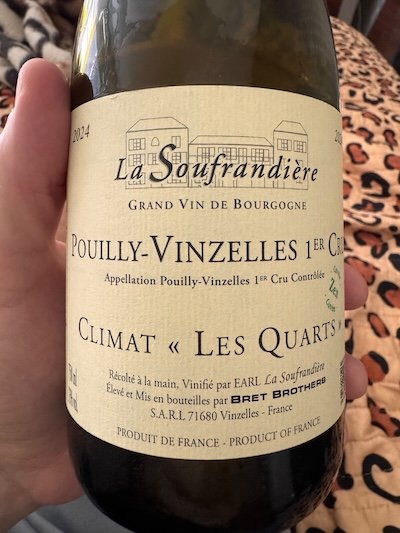
The bottle that completely blew my mind recently was the 2024 La Soufrandière “Les Quarts” Cuvée Zen. 100% 1er cru chardonnay from Pouilly-Vinzelles from a two hectare plot that is whole cluster-pressed and absolutely brimming with character. It’s like chardonnay with electricity running through it. Every sip lights up your taste buds with acidity, fruit, and exotic spices, zinging your mouth to life and jolting your senses into a splendor. It’s not only the best wine I’ve ever had from the Mâcon, it’s one of the best chardonnays I’ve had from anywhere all year—and I drink a ton of chardonnay.
To better understand the difference between everyday Mâcon wine like the standard Louis Jadot Mâcon-Villages (which you can get at just about any supermarket, even the CVS Pharmacy by my house in Burbank) and this wine from the Bret Brothers, I highly suggest doing a side by side tasting. Pour yourself a glass of the most boring Burgundian chardonnay you can find and then taste this absolutely thrilling and dynamic wine from the Bret Brothers beside it. If that comparison alone doesn’t help you understand what’s so exciting about low-intervention wines made by real winegrowers dedicated to excellence, then I don’t know what else will.
Ultimately, that comparison is what makes all these stories so potent. There’s a reason people love watching The Bear. We all love a tale of hard work, dedication, and exceptional talent. We gravitate to generational sagas where a new legacy is built on the foundation that preceded it. Look around the low-intervention wine world right now and you’ll find dozens of these stories, both old and new. Hearing about the story is exciting enough, but tasting the before and after is about as fulfilling as anything I’ve done lately.
-David Driscoll