
A New Generational Divide
As I’ve been driving around Los Angeles this past week, tasting low-intervention wines and talking to retail shop owners, somms, and other industry folk who gravitate towards the natural wine scene, I’ve come to a very quick understanding: we are in the midst of a generational divide when it comes to wine.
If you read articles like this in Forbes, they’ll tell you that the current divide in the market is due to marketing, as in the way that wineries interact with their consumers—and they’re not wrong. But there’s a lot more to it than that. Imagine reading a synopsis of the music industry in 1991 and chalking up the divide between successful and unsuccessful bands to a mere difference in outreach. There was a much bigger divide between 80’s holdovers like Warrant and Slaughter and emerging grunge acts like Nirvana and Pearl Jam than just marketing. It was a chasmic divide between why they made music and their entire raisons d’être that drove people away from commercialism and into what felt more real (until it too became commercial).
The same goes for wine right now. It’s a divide between generations that both like to drink wine, but are inspired by completely different motivations for why and what they choose to imbibe.
Walk into a wine store that caters to older Gen Xers and Boomers and you’ll still find Napa Cabernet and Bordeaux on the shelves, likely adorned with 90-100 points scores from publications like Vinous and the Wine Spectator. But walk into a more youthful wine shop and you’ll find little signs that say things like: “All our wines are farmed organically at a bare minimum,” or “We only work with low-to-no intervention producers.” One of these stores is trying to sell you the idea of polished quality, the other is selling you the idea of purity and environmentalism. The former is like a Porsche whereas the latter is like an electric car or maybe even a bicycle.
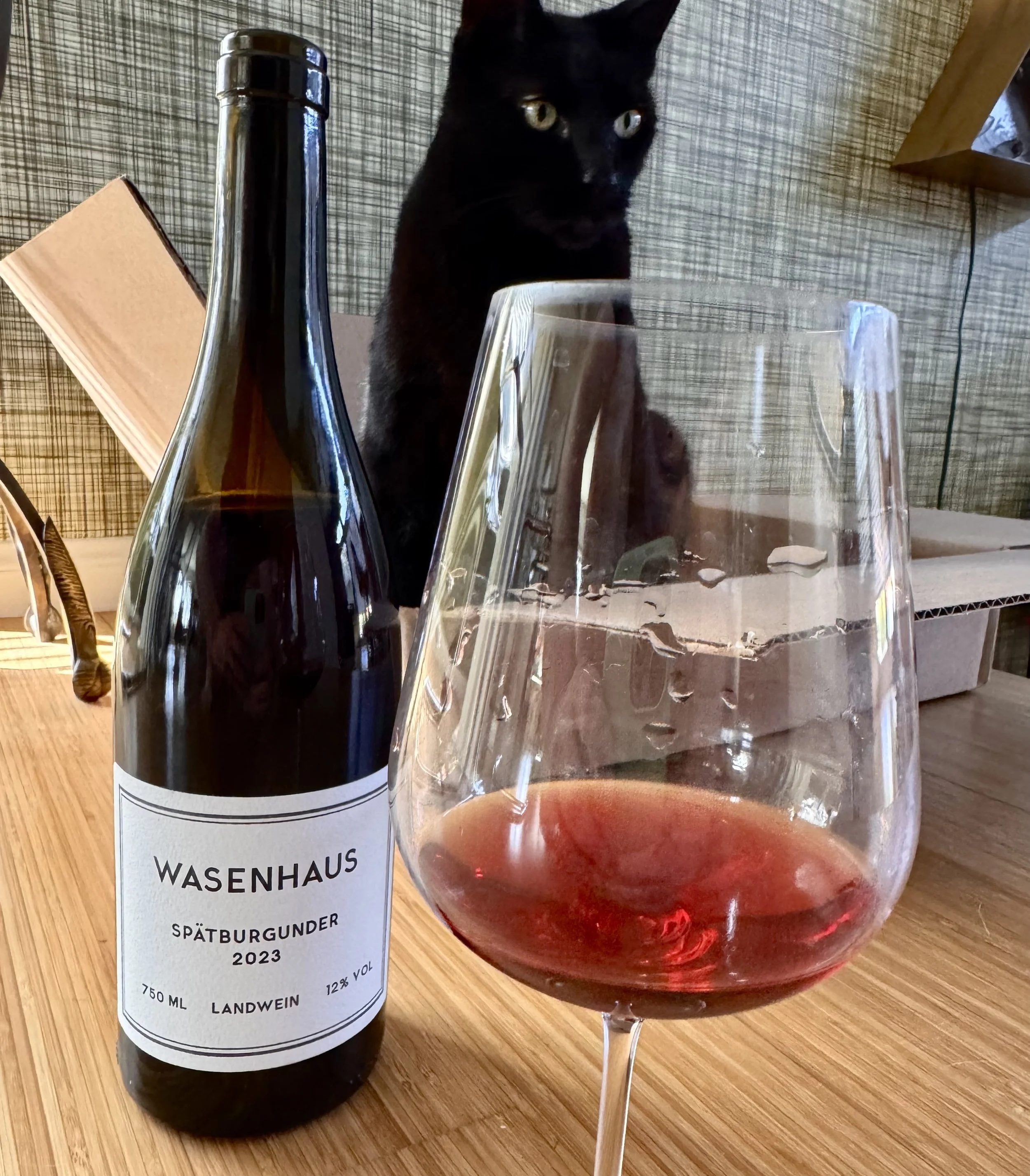
I have to admit: I’m excited by what the younger generations are doing. Last night, I had my first bottle from a tiny German producer in Baden called Wasenhaus and—boy oh boy—did it deliver. God damn, was that Spätburgunder delicious! Delicate, integrated, and soft on the palate, yet bursting with fresh berries and packed with incredible concentration. I was spellbound by every sip. That being said, I spent $55 for this entry level Pinot Noir, so I was hoping it would be good.
Can today’s wine-loving Millenials and Gen Zers afford to drop nearly $60 on a bottle of red for the evening? Maybe. Do they want to? I don’t know. This is the part I’m still confused about. The people making these wines are definitely young and passionate. But who are their end consumers? Imagine going to a Nirvana concert in 1993, but it’s $500 like it would be today. It would be mostly older yuppies, not so many grunge kids.
It reminds me of the craft whiskey movement between 2010 and 2015. We had people releasing 2-3 year old rye whiskies that were $60-$100 a bottle. They weren’t necessarily better than the standard Kentucky and Indiana rye whiskies that were available at that time, but the people who made them were more interesting and the stories were often more compelling. Or sometimes they were utter shit. It varied by producer. The point is: the younger drinkers were the ones driving the movement, but they oftentimes were priced out of the market.
I’ve seen the same phenomenon this past week. I’ve also had the same qualitative variance in my natural/low-intervention wine tastings over the last week. Some wines absolutely blew me away, while others were just so-so. That’s the way most things work, not just wine, so I’m not upset or anything. To me, however, discovering the up-and-coming producers worth paying attention to is not unlike discovering a new musical movement. As a huge Shoegaze fan, there’s only so much My Bloody Valentine, Slowdive, and Cocteau Twins and I can listen to. Eventually, I need some new blood. Discovering newer groups like DIIV, Slow Crush, and Forsaken Autumn (out of China) has kept me going over the last decade, and I still keep my ear out for new stuff all the time.
The divide you’re seeing in the current wine market is much more complicated and nuanced than what I usually read in the news each morning. There are subdivisions and subcultures that are each creating their own niche and their own space, fracturing the collective attention of an entire industry into little nooks and crannies. Ultimately, that’s why some producers are thriving and others are flailing. The ones who have honestly tapped into the new zeitgeist are bringing in established customers (like me) and winning over newcomers.
-David Driscoll