
Blanco Tequila is the New Single Vineyard Chardonnay
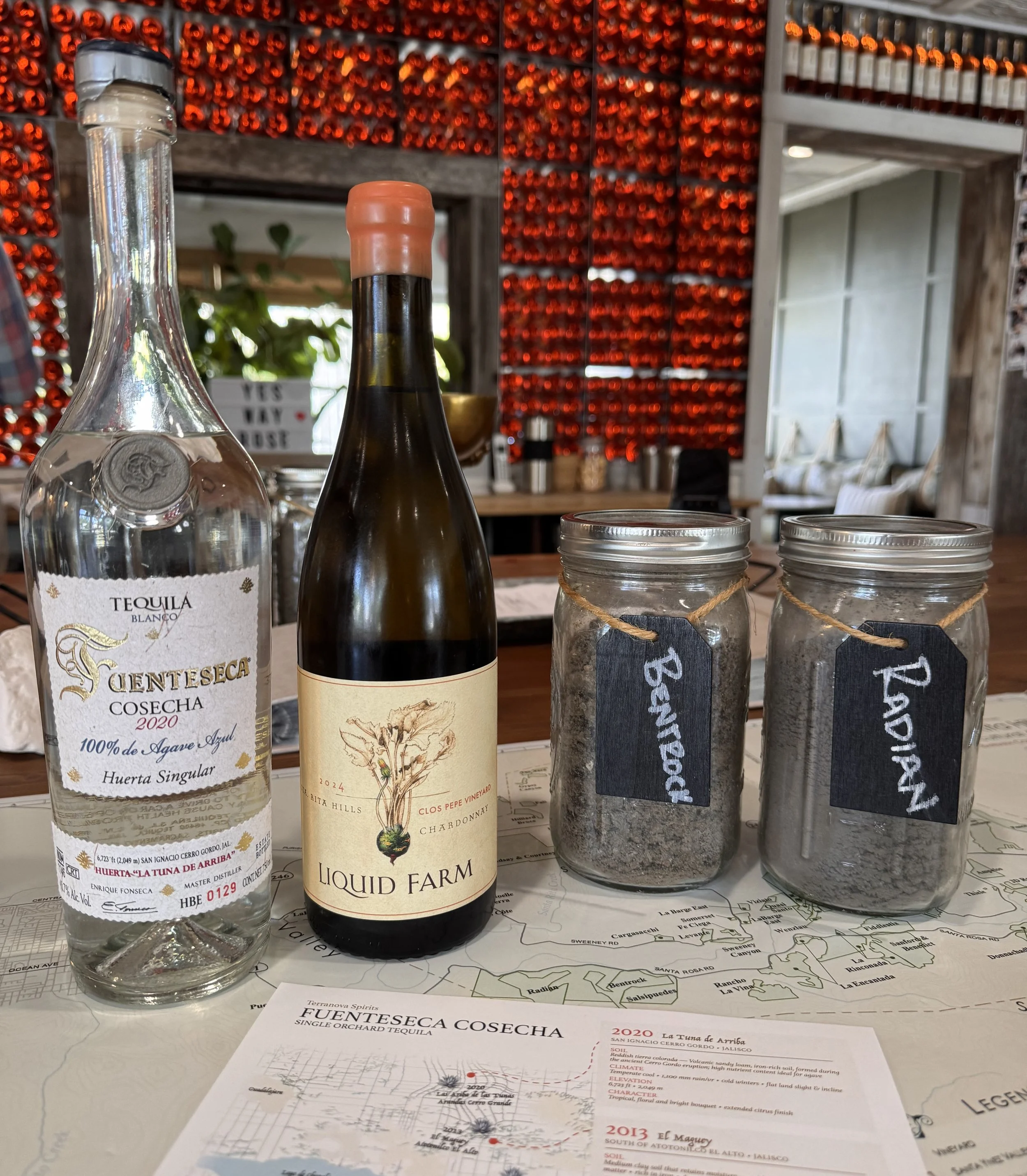
The new 2020 Fuenteseca Blanco Tequila along side a single vineyard Chardonnay from Liquid Farm
When I first started in the wine industry back in 2007, Chardonnay was not cool. In fact, it was so uncool there was a mnemonic device that wine store clerks would often repeat when recommending wine to consumers: A-B-C, anything but Chardonnay.
Why was Chardonnay so maligned back then? For the same reason Miles lays out in the movie Sideways: many of the popular California expressions were flabby, extracted, and overly ripe—a far cry from their old world counterparts that balanced richness with acidity. These domestic labels would take Chardonnay—a variety capable of crisp and clean white wines—and let it go through malolactic fermentation, turning that crisp acidity into a creamy mouthfeel. Then they would throw it into new oak for twelve months or longer, adding vanilla and sweetness on top of the Chardonnay sundae. The result was something so buttery there was even a brand at the time called Butter Chardonnay.
I probably drank two bottles of Chardonnay a year back then. Now I drink about two bottles of Chardonnay a week, on average. It is by far my favorite varietal of wine for one simple reason: no other grape reflects its origins as clearly or as cleanly.
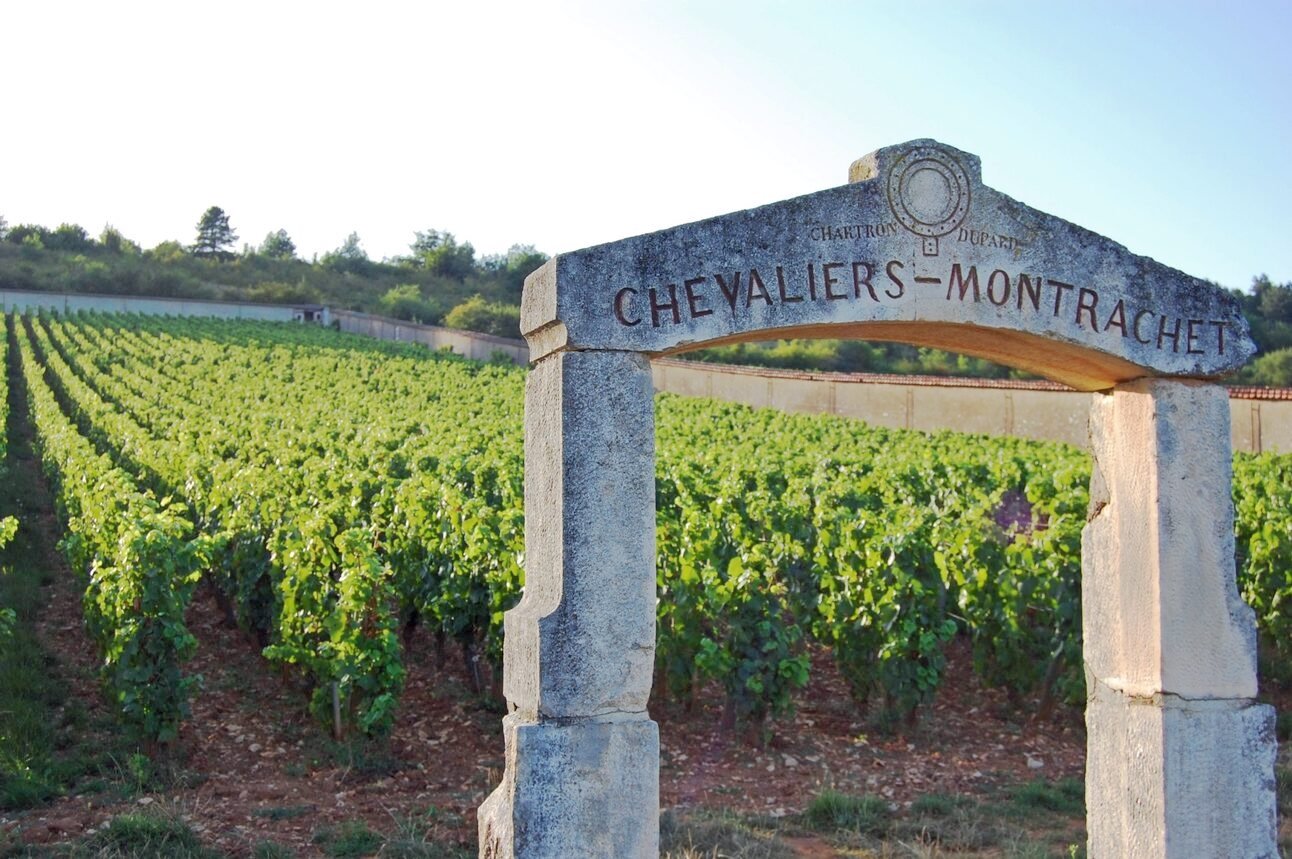
Chevaliers-Montrachet vineyard in Burgundy, a grand cru Chardonnay site
As I’ve been telling people for the last two weeks at a series of events I’ve been hosting comparing single vineyard Chardonnays to single orchard Tequilas, the most expensive wines in the world aren’t necessarily the most delicious. I used to (and still do) hate the expression: the best wines are the ones that you like best. That’s not even remotely true. Just because you like Pizza Hut doesn’t mean the pizza is good.
I prefer to describe it this way: the world’s most expensive wines are priced according to demand. And where are the world’s most expensive wines from? Burgundy.
And why are they in such high demand? Because they’re sourced from grand cru single vineyard locations with a finite amount of fruit. Even if they wanted to make more, they couldn’t.
Why are those single vineyard locations so renowned? Because there’s nearly 1000 years of documented history detailing how different plots of earth in Burgundy create unique flavors in Pinot Noir and Chardonnay wines. There were monks during the middle ages taking notes on the differences between one vineyard versus another. Historical precedence is a powerful thing.
Unlike Bordeaux or Napa (or even Scotland or Kentucky for whiskey), where quality is associated with a particular producer, Burgundy has fixed its prices to very specific plots of earth. Chardonnay grapes grown on a few specific rows of vines on a certain hillside can be worth quadruple or even quintuple the value Chardonnay grapes grown twenty feet further down the slope.
Are they worth it? Depends on who you ask. But that’s why they’re expensive. Really expensive.
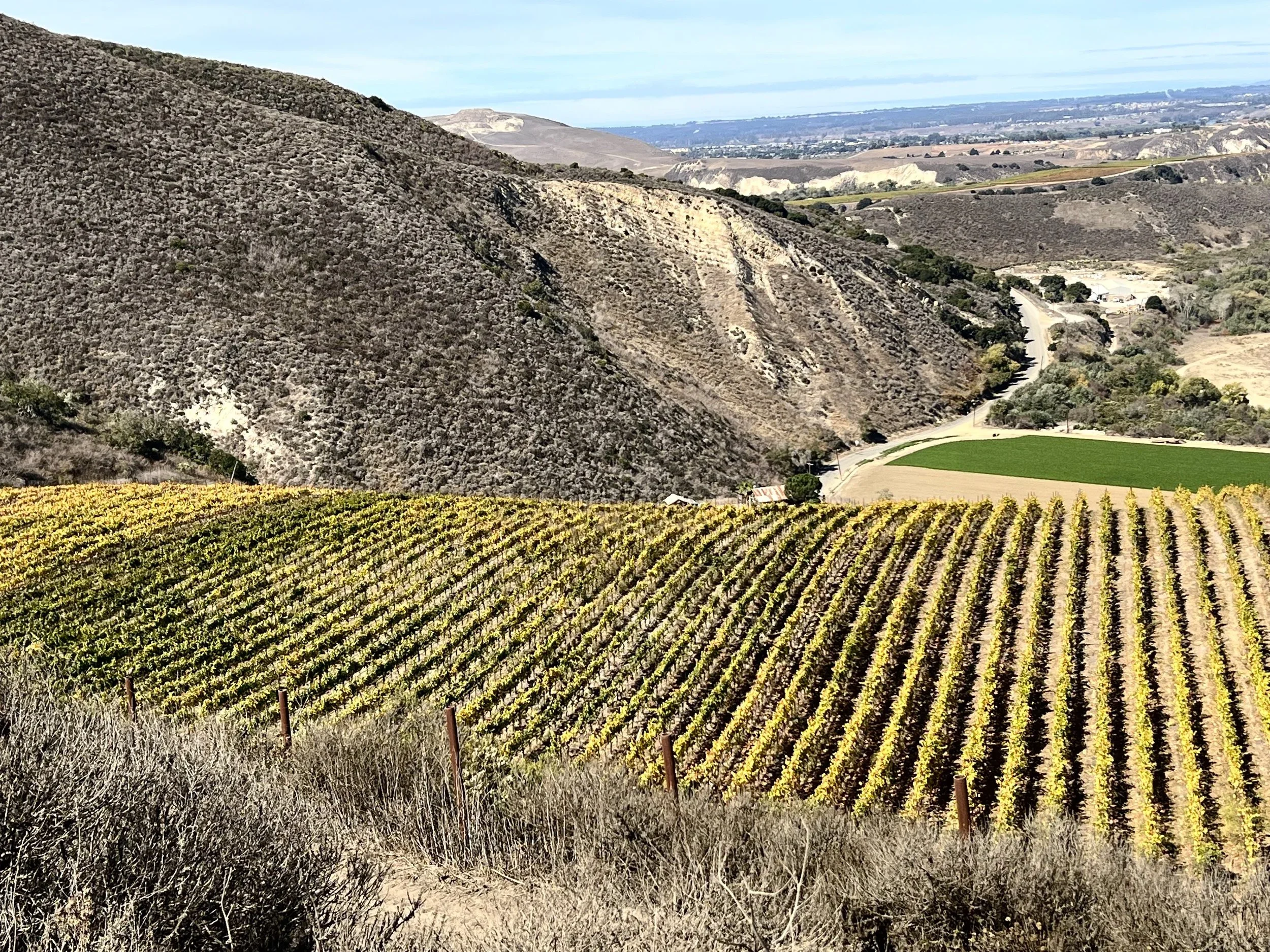
Looking out at the Sta Rita Hills from Radian vineyard
Over the last two decades, California’s prowess for Burgundian style Chardonnay has become incredibly strong, especially along the Sonoma Coast, in the Santa Cruz Mountains, and within the Santa Rita Hills AVA near Santa Barbara. I have a strong affinity for all three regions, but especially the latter. Living in Burbank, I can get up to Los Olivos in about two hours and I’ve been doing it regularly since I became obsessed with these vineyards. One particular site, Radian, has soils so sandy and silty it’s like walking on the moon, and its high-elevation Chardonnay creates a wine so tangy and minerally, it’s like a salty, savory blast of electricity.
Hence, when I started working with Tequila distiller Enrique Fonseca on some marketing ideas earlier this year, I knew exactly the direction we should take. Enrique is the owner of NOM 1146 and the largest grower of agave in Jalisco. He has so much tierra planted to agave azul, it spans dozens of different soil types, climates, elevations, and drainage conditions.
About a decade ago, Enrique chose a specific hillside of prime agave and decided to create the world’s first “grand cru” Tequila, sourced from a huerta singlar—a single orchard. A few years later he did it again. Then this past month, he released a third single site blanco Tequila that absolutely blew my mind. However, rather than chase the agave hunters on social media—the guys who obsess over Fortaleza Reposado and other aged expressions—I suggested a different tactic. I told him: “We need to show this Tequila to wine lovers,” particularly people like me who love single vineyard Chardonnay.
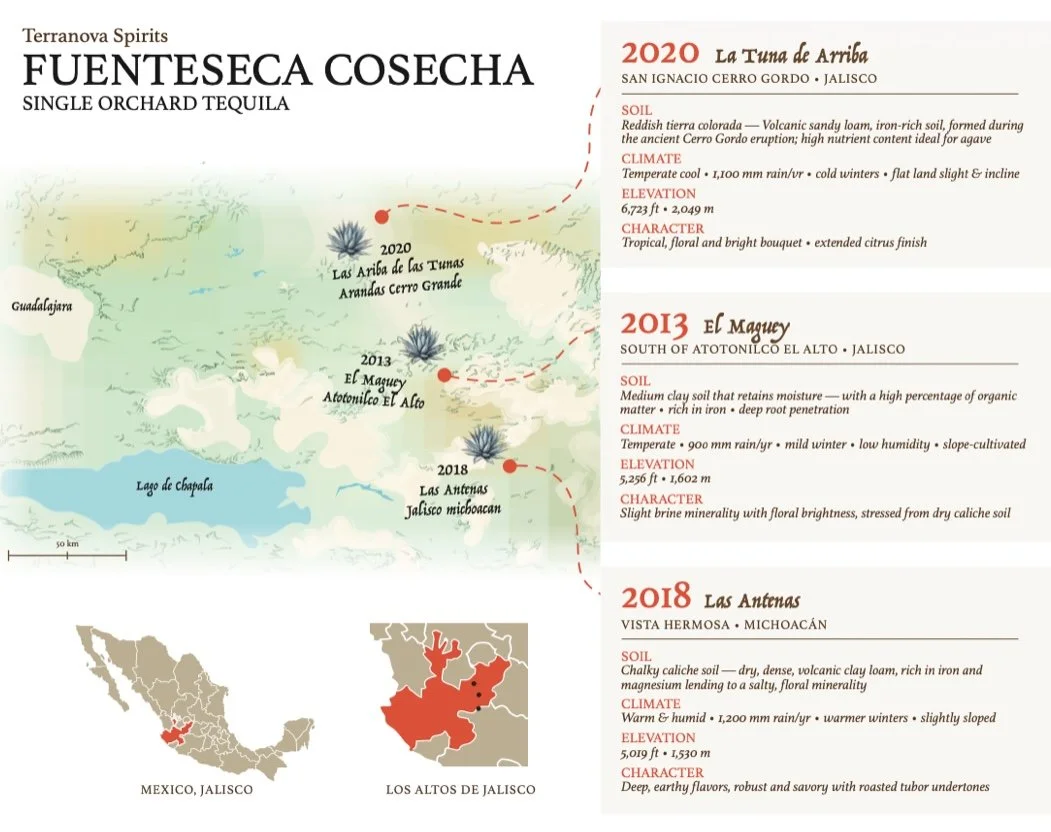
A map I put together with the Two-Nineteen design team showing all three Fuenteseca orchard locations
While most of the adventurous blanco drinkers have ventured over to mezcal, with its wild agave varieties and pure, unadulterated flavors untouched by oak influence, blanco Tequilas like the Fuenteseca Cosecha releases are made specifically for terroir nerds. The variety is the same across the board (blue agave), the production methods are almost identical, so the only difference between the three Tequilas is specifically where the blue agave was grown.
The 2013 Fuenteseca Cosecha came from a site called El Maguey, south of Atotonilco, with dry caliche soil. The 2018 was sourced from a site in Michoacan called Las Antenas in a much more humid environment. The 2020 comes from a colder, high-elevation site known as La Tuna de Arriba, and it’s fair to say that all three expressions of Fuenteseca’s Cosecha series are completely unique from one another. The 2013 is minerally and clean, the 2018 is earthy and peppery, and the 2020 is tropical and fruity.
When I was at the Liquid Farm tasting bar in Los Olivos this past week, meeting with owner Jeff Nelson about some of the dinner events we have planned, I tasted the same differences between his single vineyard Chardonnays. Some of them are minerally and clean, while others are more robust and fruity. It just depends on the vintage and where the grapes were grown.
Personally, I think showing wine lovers the differences between single site Chardonnay wines is a fun exercise. But moving on the single site Tequilas immediately after? We’ll find out soon enough!
-David Driscoll