
The Magic of Baden
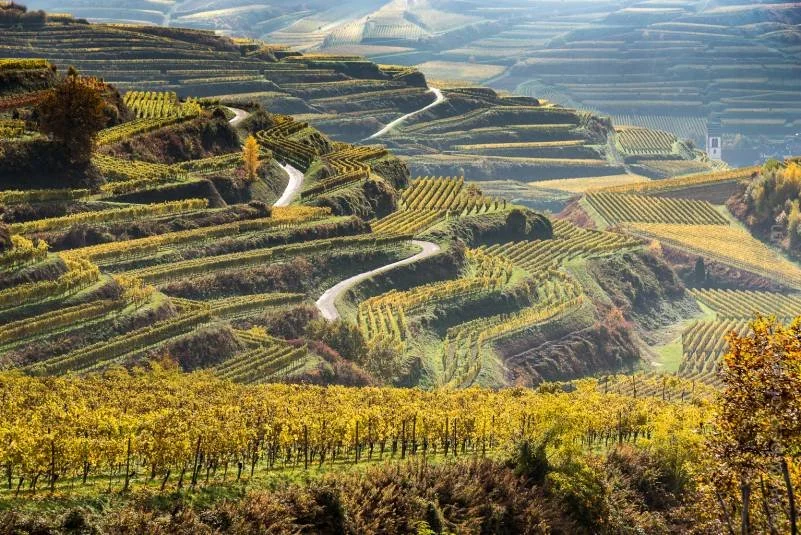
There’s a famous Robert Parker quote from 2002 about German Spätburgunder that I remember reading when I first started in the business:
"German Pinot Noir is a grotesque and ghastly wine that tastes akin to a defective, sweet, faded, diluted red Burgundy from an incompetent producer."
Of course, this was coming from a guy who thought Caymus was delicious. Parker’s thirst for big, extracted, boringly monolithic wines is the stuff of infamy these days, and he also couldn’t have been more wrong about Spätburgunder.
The Germans have been making Pinot Noir in and around Baden for more than 1000 years, as documented by Charles III who brought it over from nearby Burgundy in the year 884. While it can be far more light-bodied and dainty than what we’re used to drinking in the U.S., the ethereal nature of Spätburgunder (the German word for Pinot Noir) has always been alluding in its own right—to me, at least.
Nearly 20 years ago, I remember drinking the August Kessler Spätburgunder from the village of Assmanhausen in the Rheingau and being enthralled. That was partially because we used to stay in Assmanhausen during the summer when I was younger, so I always had fond memories of the area (plus, I thought the name was funny as a kid). The wine was a pale red, but it was bursting with berries, while remaining soft and gentle on the palate. In many ways, it was like a dark rosé, but at that point in my life I had never had anything like it.
Compare that wine to what I’ve had from Baden’s Wasenhaus over the last two weeks and it’s clear than Germany’s younger generation has taken Spätburgunder to an entirely new level. Part of that qualitative evolution may be the result of climate change, but it’s mostly due to dedication and devotion, from what I can see.
Christoph Wolber and Alexander Götze are German winemakers who met while studying enology in Burgundy, and went on to work at some of the Côte d’Or’s best domaines. All the time they were making Pinot Noir in Burgundy, they were dreaming of returning home to apply their talents towards Spätburgunder in Baden. That finally happened in 2016 when the first vintage of Wasenhaus came to market.
Rather than focus on the specifics of Baden, like the volcanic and limestone soils that were noted by the monks back in the 13th century, I’m going to address what Wasenhaus does that—from my purview—make the wines so dynamic.
First and foremost, like many young winemakers who are finding their way in the world, the guys at Wasenhaus sought out the vineyards that were neglected and difficult to farm—primarily old vines with low yields. Second, they farm those vineyards organically. Third, only native yeasts. Fourth, no fining or filtration with minimal sulfur. This is all pretty much table stakes for the low-intervention world in 2026. I have friends in the Santa Cruz area making wines the same way and they’re brilliant.
From what I’ve read about Wasenhaus, it seems the real magic is a combination of the above-mentioned practices combined with pragmatic experience on the ground. Depending on the vineyard and the vintage, they might do whole cluster fermentation or not. They might add stems, or not. Extraction on the skins is minimal so the wines are soft and while remaining pure and fruit-forward. At the same time, they’re neither “faded” nor “diluted” as Mr. Parker once noted. There’s a happy medium of 12% alcohol, concentration of fruit, and delicacy of texture that simply has to be tasted and experienced to be understood. Words won’t do it. You need to go get a bottle.
When you taste a viscous, oily single malt whisky from Scotland—one that has a very specific texture that has more to do with production than maturation—you take note because it stands out from its peers. Think of Springbank or Clynelish as examples. The same textural sensation is at work in the Wasenhaus wines, but its counterbalanced by brightness and zest from the red fruit, which lights up on your palate with every sip.
There’s a reason Baden was noted by Cisterian monks for its Pinot Noir potential all those centuries ago. The potential for fine Pinot Noir is clearly there. With a little know-how and a return to the old ways of winemaking, Wasenhaus seems to be recapturing that magic. I can’t drink enough of it.
-David Driscoll