
The Two Biggest Scenes in Alcohol Right Now
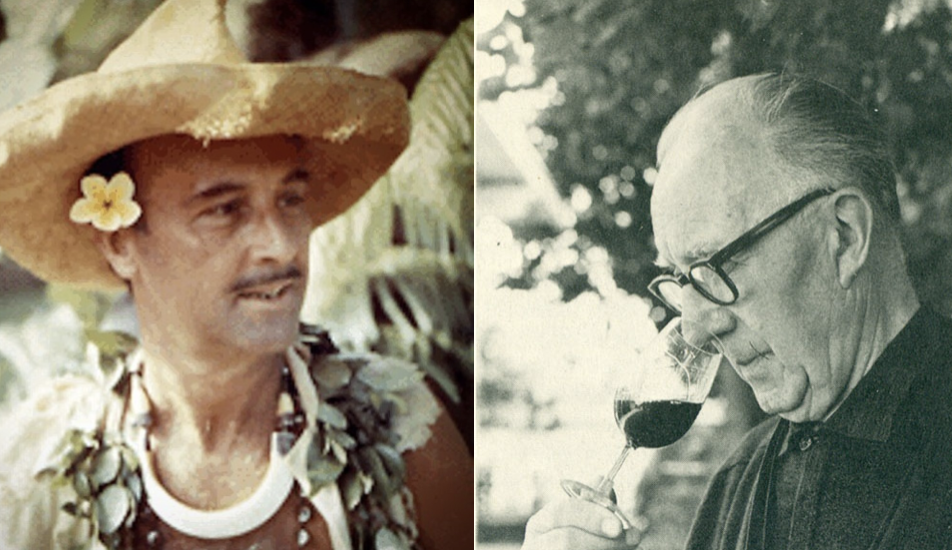
On the left is Donn Beach, also known as Don the Beachcomber—the father of modern tiki.
On the right is Jules Chauvet, also known as the father of the modern natural wine movement.
Both of them are pioneers in entirely different ways, yet both are the figureheads for the two biggest scenes in the alcohol industry right now: tiki culture and low-intervention winemaking.
As with all scenes, many people helped bring them to the forefront of pop culture. Trader Vic was emblematic in creating much of the tiki cocktail culture we celebrate today, as were Jacques Néauport and Marcel Lapierre with the sans soufre movement. To become a global phenomenon, there must always be apostles and ambassadors. Both of these scenes seem to have an endless amount of each, which is why they’re taking over the wine and spirits culture with no end in sight. These are movements that continue to pick up steam with subsequent generations.
However, I’m not here to write about the history of these scenes or how they came to be. There are dozens and dozens of great books on the subject that will break down the background for you. As someone who dabbles in both communities, I’m here to talk about their similarities. Do tiki shirt-wearing, Mai Tai-sipping, vintage-inspired cocktail fans in mid-century modern bars actually have something in common with neo-hippie, street art-inspired, naturalists drinking sulfur-free wines in the countryside?
The short answer is: yes.
For starters, both of these scenes revolve around alcohol, but they’re really about throwing a gigantic parties. I read a quote from Francois Morel, one of the Parisian pioneers of natural wine, where he basically said the point of sulfur-free for him was to figure out a way to keep the drinking late into the evening without getting a headache. When I started out in the wine industry back in 2007, the people who were serious about wine took notes, tasted in silence, and took turns repeating whatever they had just memorized out of a book. Natural wine parties often prioritize the social side of drinking first and foremost, while still remaining educated and interested in quality and production. It’s so refreshing!
The same goes for tiki culture. Dressing up and drinking something fruity with lots of rum in it is the antithesis of what serious whiskey drinkers or foodies seem to hold dearly. That’s what drew me into the community to begin with: the complete lack of pretense. At this point in my life, I like going to tiki bars because there’s a great crowd of interesting people and often even a marketplace where artisans and craftsman sell their tiki-inspired merch. My two favorite things to do are drink and shop.
The merch is a big part of the natural wine scene as well. Cool t-shirts, cool posters, cool artwork, cool hats—you name it. Every natural wine bar worth a salt has an Instagram full of modern prints, exotic labels, and graffiti-style vibes that are the opposite of stuffy. That’s because the natural wine movement is becoming an identity for the people involved in it. It’s more than just a philosophy and a belief system; it’s an entire lifestyle that incorporates music, fashion, art, and social interaction. Tiki is exactly the same.
Because there’s so much more than just alcohol to appreciate, I’m becoming more and more entrenched in both communities as I make new friends, create new contacts, and find ways to work within these locally-curated scenes. Unlike the modern American whiskey, Scotch, or Tequila communities, the tiki and natural wine scenes are constantly brimming with fresh blood, new enthusiasm, and younger drinkers who want to be a part of the party. Every single day I open up social media, I discover 50 new low-intervention wineries that I want to learn more about. I can’t say the same thing about the spirits side of the business right now. That side of the industry has gone absolutely stale.
With tiki, it’s not really about the rum as much as it is the history and the celebration of everything whimsical. I’m meeting vintage collectors who specialize in merch from lost bars and restaurants, or sell mugs and swizzle sticks in the guise of these historical landmarks. The point is: once you catch the vibe of both these scenes and you learn to love what it is they’re celebrating, you become addicted to the energy because it’s forward-thinking, fun, and centered around the enjoyment of life rather than the evaluation of alcohol.
I’m currently smitten by both, if you can’t tell. I invite all of you to join in on the fun,
-David Driscoll