
Timing is Everything
When I first started working at K&L Wine Merchants back in 2007, the Bordeaux boom was in full swing and K&L was most definitely a Bordeaux powerhouse. Parkerization was still going strong, prices were through the roof, and to learn about Bordeaux was mostly to realize that you couldn’t afford its most alluring wines on a wine store clerk’s salary. By the time I realized that Bordeaux could be interesting, I was already priced out of the market.
My older colleagues, however, were sitting on huge cellars of famous first and second growth labels that had cost them a small fraction of what I was looking to pay. In fact, their cellars had appreciated so quickly that many of them were considering selling what was left and cashing in on the bonanza. Their tastes were also evolving away from full-bodied reds, so each time they considered opening a bottle of Latour their minds were forced to decide between actually enjoying the wine or taking a vacation in Hawaii from the potential proceeds.
I learned plenty about Bordeaux over my decade-plus in retail, but I had missed the affordability window to truly experience the wines that made the region so iconic. Yet, while I was somewhat lamenting that lost opportunity, the spirits industry was starting to gain steam. I decided to lend my services to developing a burgeoning category that no one else at the company seemed to care about, throwing myself into single malt whisky and Bourbon, learning about the defunct legends like Port Ellen, Brora, Karuizawa, and Stitzel-Weller. I remember an evening in Napa when a few colleagues and I sat outside smoking a joint and drinking 1981 Brora like it was no big deal. I also recall casually pouring our exclusive single barrels of Karuizawa for family members at Thanksgiving. Today those bottles are worth thousands of dollars a piece and, all these years later, people still tell me how lucky I was to taste those whiskies when they were relatively affordable.
All of this is to say that there are brief moments in history when unique and compelling wine and spirits movements are born and future icons are within reach. During these fertile years, the opportunity to participate is there for the taking if you’re willing to seek it out. Often, you either jump in feet first and soak up every minute of it, or you miss it. Timing is everything. As I’ve watched the low-intervention and natural wine scene continue to grow over the last year or so, I’ve been tracking prices for some of the most interesting producers and it’s only gone in one direction. Realizing that I was in danger of missing my window to experience a small part of it before it exploded into something beyond what I was able to afford and/or access, I traveled to Burgundy this past week—the epicenter of the movement—to hang out with Paul Wasserman and Icy Liu. I simply wanted to soak up the scene.
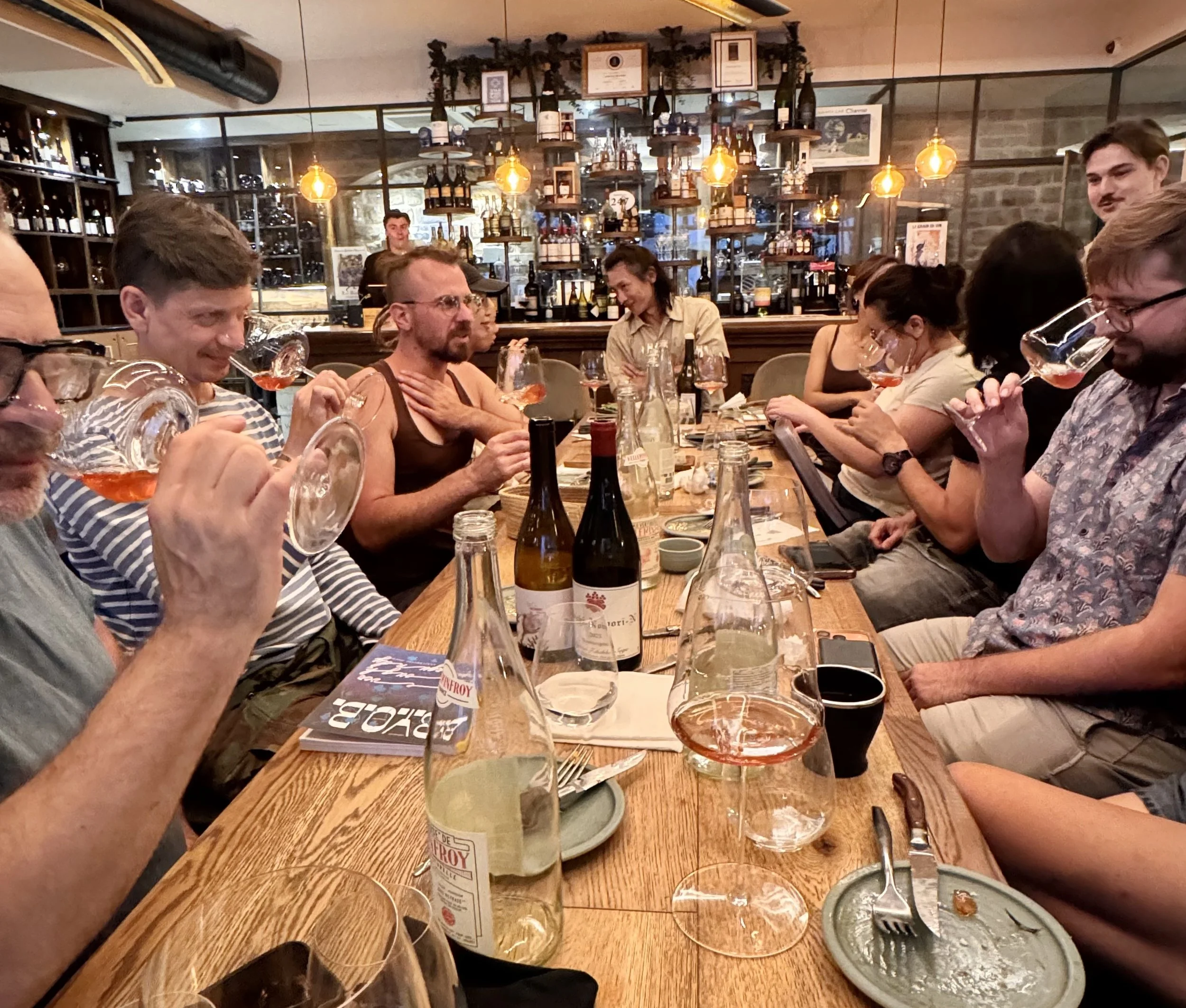
Last night, I joined a large group of industry folk for a soirée of modern cult wines at Les Arches des Vins in the center of Beaune. For over three hours, various members of the table would choose a bottle, have it served blind by the restaurant, and the rest of us would try to guess what it might be while discussing its merit. I was seated next to Paul, who did most of the ordering, and Alexander Shchurenkov, the founder of B.Y.O.B. magazine, who, like me, was also in town working the 2026 harvest. Having just discovered his publication a few months back, I had been devouring issue after issue in anticipation of the trip, so I was excited to chat with him. Icy Liu and Juliette Leibrock from Becky Wasserman were on my right, along with winemaker and importer Valentin Krug, who I had been picking grapes with in Santenay earlier that morning. They chose the bottles. I just tasted, listened, and learned.
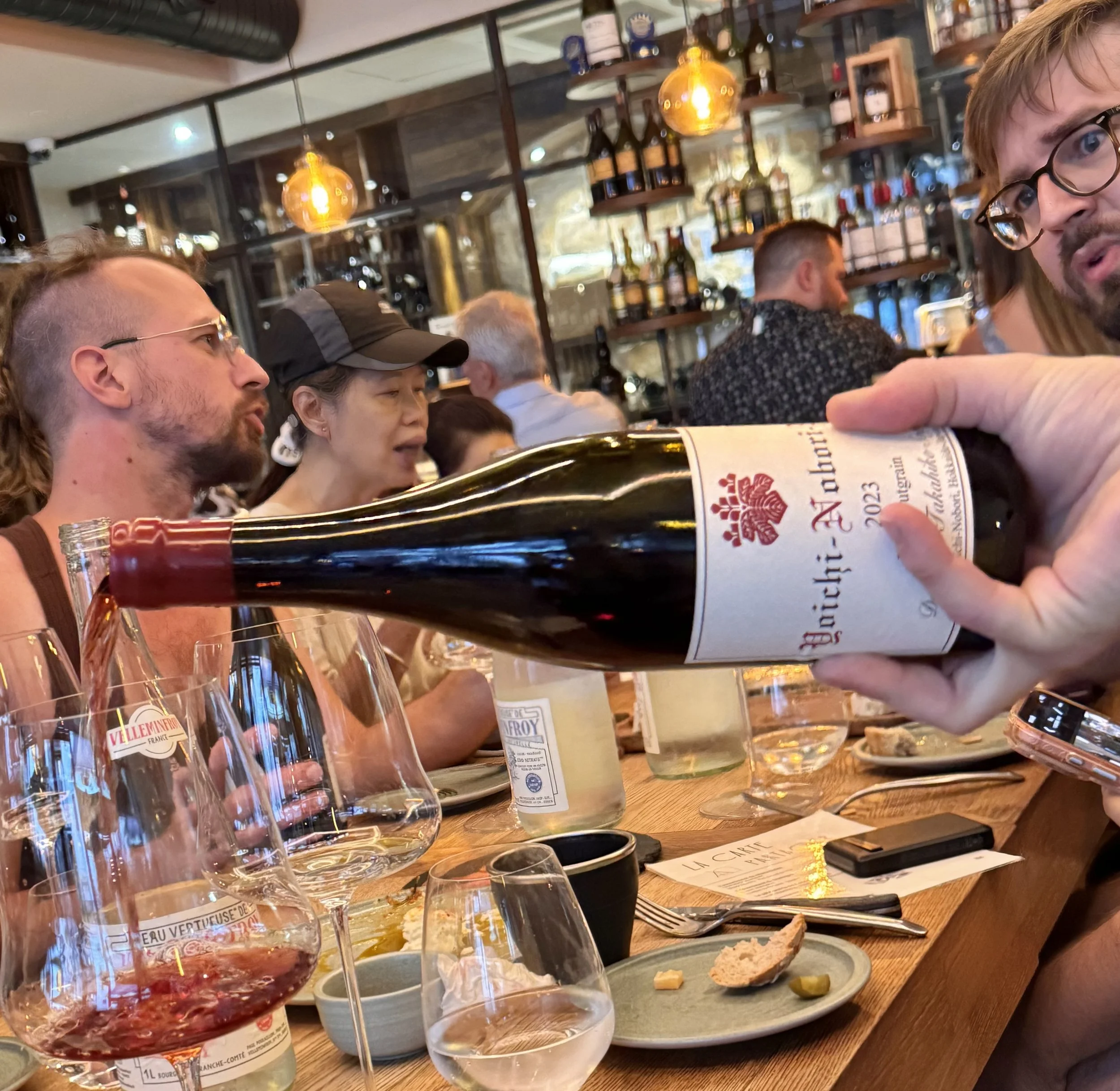
The first bottle Paul ordered was the 2023 Yoichi-Nobori-N Passetoutgrain—an IYKYK bottle from Japanese wine producer Domaine Takahiko. The latest issue of Alex’s B.Y.O.B. had just featured an article about Takahiko Soga’s wines, calling them “some of the most elusive in Japan,” almost “impossible to buy in a wine shop,” and “allocated to Japanese customers through lotteries.” Basically, these bottles are ghosts already. Yet, here we were in Beaune, about to drink a glass in good company like it was no big deal. Paul very kindly said: “I think it’s important that David tries this.” The night had barely started and already I was tasting wines that I would never be able to find back at home.
I looked at Alex after he finished his first sip and there was a wry smile on his face. Paul was waxing about the vegetal character and his preference for wines that taste like “the things planted in the earth.” I was both transfixed by its umami profile and haunting red fruits (a blend of Pinot Noir and Zweigelt) as well as the conversation happening around me. I was also thinking about my trip to Yoichi over a decade ago, when the industry was clambering for Japanese whisky from the eponymous Nikka distillery. Now, it was all about Takahiko and vineyards. How quickly things change.
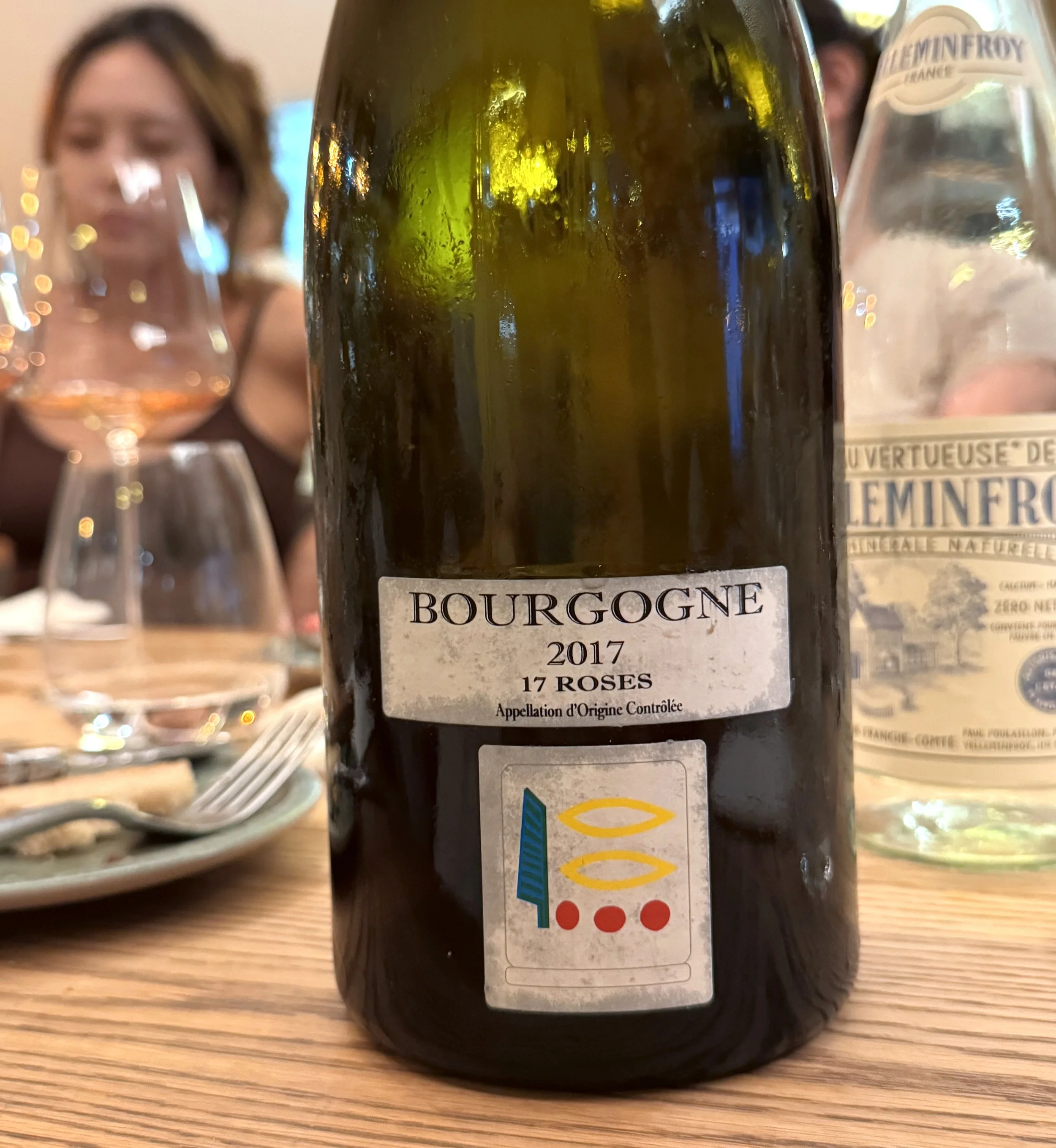
Valentin then brought out a carafe of rosé and the group did its best to guess the origin. Spain or Portugal were the most prevalent estimates. “We’re in Burgundy, so we drink Burgundy,” Valentin answered with a big smile. The wine was the 2017 17 Roses from Domaine Prieuré Roch (in magnum, no less), an insanely rare rosé from one of the region’s most exciting low intervention producers, started in 1988 by Henry-Frédéric Roch, the former co-director of DRC.
I asked Paul if the wine we had enjoyed the previous evening—the 2021 Les Briquottes Cuvée Lou from Antonio Quari—was related, as I remembered hearing the names mentioned together. He told me yes, indeed; Anthonio Quari was also the cellar master at Prieuré Roch, so it was likely that he played a hand in this wine as well. Just to understand the realm in which we were playing, I searched for the 2017 online to check recent costs. Secondary auction pricing had the bottle around $400+ and we had just opened a magnum (although we didn’t pay nearly that much). Incredibly expressive on the palate with cherry fruit and notes of flinty gunpowder and piercing acidity, I’d never had anything quite like it in twenty years of drinking wine, (and, yes, I loved it).
At that point, a bottle selected by the other end of the table was poured and we all just sort of sat quietly. “I can’t do it,” Paul said, referencing the very classically-tailored Chardonnay that was clearly in our glass. It ended up being a 2023 Puligny-Montrachet from a fairly established producer, but we all thought it was rather bland as a follow up—especially Paul. “I just can’t go back,” he said to Alex and me with a resigned look on his face; “I can’t do it anymore; the whole voluptuous and fruity thing. I like angular, skinny wines with rough edges.”
He was summarizing exactly how I had felt earlier in the month when comparing the Becky Wasserman selections I had just purchased against some of the more traditional wines in my cellar. After a week of drinking alongside Paul in Beaune, I got it. Once you’ve stared into the abyss, it’s difficult to look at classical wines in the same light. I certainly can’t. At that point, Alex opened the current issue of B.Y.O.B. and showed Paul his own quote from one of the magazine’s interviews, laughing at how apropos it was.
“Like ten years ago, I started to really get bored with Chardonnay white Burgundy, like really bored,” Paul’s quote read. It was clear he hadn’t changed his mind since then. “I’m really into reductive qualities in white wines, the good kind,” he said to me soon after; “But ten years from now I’ll probably be over it and on to something else. I’m really getting into sake right now.”
At that point, another movement will likely be in its nascent stage, beginning its evolution into the greater public purview.
-David Driscoll