
After my eight day jaunt to Beaune to work the 2026 harvest with the Becky Wasserman group, you’d think that I would be eating, sleeping, and drinking nothing but Burgundy right now. Privately, I most certainly am! I’ve been tracking down the last of the allocated wines from the producers I visited during my stay (Thomas Bouley, Les Horées, Chanterêves, etc), and drinking them with fond memories in my head.
That being said, my time in Burgundy has me thinking about Italian wines because, as you may or may not already know, the heralded Italian wine importer Oliver McCrum is one of my best clients. I do a lot of marketing work with their operations team and I’ve been reimagining their stacked portfolio with an entirely new perspective. I’ll post some of the topics I’ve been thinking about over the next week or so. Here’s the first one.
Germany and Austria are both having a moment with wine industry professionals. Whether its the impact of a warmer climate, a new commitment by younger generations of winemakers to organic and biodynamic farming, low intervention practices in the cellar, or a combination of all the above, I can’t remember a time when German and Austrian wines were as exciting (and sought-after) as they are right now. Importers are getting calls from retailers and restaurants about new arrivals from Baden and Wachau. As I’ve written about before, I recently tried purchasing Wasenhaus Spätburgunder from a local retailer, only to be told it was allocated to one bottle per customer! Allocated German wine?!
All of this is great news for Alto Adige, or Südtirol depending on your language preference. Italy’s German-speaking alpine region is in the midst of its own renaissance, with the best winemakers taking the same holistic approach to vineyard management and hands-off production practices that have revitalized its neighbors to the north. As more wine consumers continue to explore these regions with a new lens, there’s one producer in particular myself and the team at McCrum believe is primed for the popularity of the modern spotlight: Kuenhof.
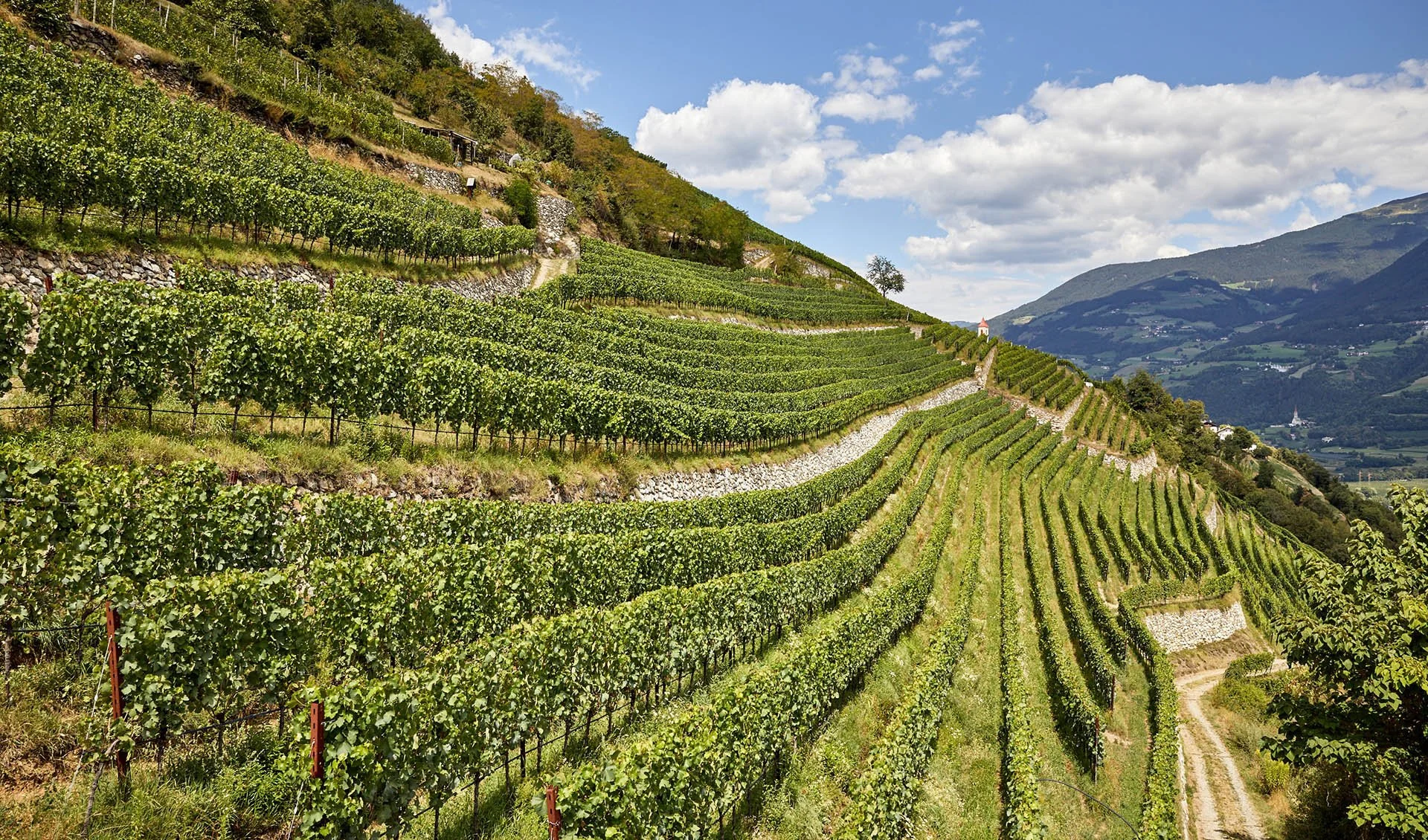
Owned by the Pliger family, there are numerous reasons why we wholeheartedly believe Kuenhof is one of the best white wine estates in all of Italy right now, not just Alto Adige. Their steep, stony vineyards—not far from the border with Austria—showcase some of the most interesting terroir-driven wines in our portfolio, with a distinct minerality that is almost electric on the palate. The Sylvaner, Grüner Veltliner and Riesling grapes are grown organically, fermented with native yeasts only, and harvested from insanely-steep, terraced slopes by hand. The quality of each harvest is meticulously managed by careful pruning.
Part of the current fascination with German and Austrian winemaking involves the increased application of holistic approaches in the vineyard to historic vineyards that have been renowned for centuries. In a recent edition of B.Y.O.B. magazine, Paul Knittel wrote about having asked his wine friends if they’d prefer drinking premier cru Burgundy from a great producer who knows how to farm over a grand cru Burgundy from a heralded vineyard, but a mediocre producer. They all chose the better farmer over the better site because, in today’s industry, most low-intervention wine lovers value organic or biodynamic farming first and foremost.
However, what happens when you get both? When historic terroirs get the organic treatment (really, just how they would have been farmed originally before industrialized winemaking) it sends a buzz throughout the industry, and that’s what makes the Kuenhof wines so compelling right now. The vineyards at Kuenhof have been mentioned in historical texts as far back as the 12th century, when it was owned by the Bishop of Bressanone. The Pilger family has owned the site for more than 200 years, and replanted it to vineyards in 1991, even refurbishing the historic stonewalls by hand.
The resulting wines are impossibly crisp, saline, and carry a striking tension that oscillates between minerality and fruit. These are hands-off, high-elevation alpine whites from a terrain that has been known for great wines for nearly a millennium. In a moment when wine drinkers are showing a renewed preference for German and Austrian wines of this caliber, I think the rising tide will soon lift the Alto Adige boat as well. If that momentum continues, McCrum may have its first-ever allocated Südtirol producer.
-David Driscoll